GST : 24ACOFS4771L2ZG

 Get A Quote

 Send Inquiry
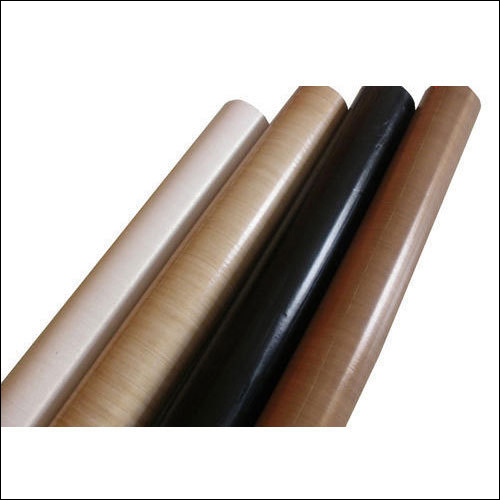
PTFE Coated Fiberglass Fabrics
Price 250 INR/ Square Meter
MOQ : 50 Square Meters
PTFE Coated Fiberglass Fabrics Trade Information
- Minimum Order Quantity
- 50 Square Meters
- Payment Terms
- Cash Advance (CA), Cash in Advance (CID), Cheque
- Supply Ability
- 50 Square Meters Per Day
- Delivery Time
- 2 - 3 Days
- Sample Available
- Yes
- Sample Policy
- Within a certain price range free samples are available
- Packaging Details
- ROLL PACKING
- Main Export Market(s)
- Western Europe, Australia, North America, South America, Eastern Europe, Middle East, Africa, Central America, Asia
- Main Domestic Market
- All India
About PTFE Coated Fiberglass Fabrics
PTFE Coated Fiberglass Fabric with standard formulation and percentage of PTFE content provides a cost effective alternative to Premium grade series used for variety of industries and general purpose application still maintaining good heat transfer release property flexibility
Properties
High release from sticky materials Non stick smooth surface
Operating temperature range 73 Deg C to 260 Deg C
Excellent chemical resistance
High electrical insulative and dielectric properties
Dimensional stabilities under heat and pressure
Low electrical losses
Mildew and fungus resistance
UltraViolet infraRed Microwave radio frequency resistance
Applications
Abrasive During the manufacturer of Grinding Wheels our PTFE or Glass Fabrics are used as a separator in place of traditional Aluminium plate On account of Nonstick surface less thickness and weight more number of disc are able to cure at a time Cost of PTFE or Glass fabric is very nominal when compare with Aluminium sheet
Aerospace Designed to be Breathable without sacrificing the nonstick properties of PTFE our porous grade allows products to cure and outgas through the fabric Porous bleeder material used as release fabric in vacuum molding
Conveyor Belts PTFE or Glass Fabric is engineered to make conveyor belts for various application in Food Textiles Garments UV IR Curing systems Extrusion Packaging Chemical and many more applications are being developed day by day
Food Processing PTFE or Glass Fabric belts are used for transporting Quick Frozen Foods through freezing chambers and bakery items ie biscuits Confectionery items Tortilla Industry Drying Fruits Tray for Baking products etc
Packaging It is used for Heat Sealing applications like LDPE pouches all kinds of dairy products PE bags Stationary and books packaging through shrink tunnels Conveyor Belts on Acma Wrap machines for detergent and soap cake packing PTFE or 2ply Glass Fabric belts are used in continuous sealers
PhotovoltaicSolar High gloss and very smooth surface PTFE Coated glass fabrics up to 2500 mm wideThis can be used as belting material during solar module lamination process PTFE Fabrics used as released products sheets belts in the vacuum lamination process of rigid or flexible photovoltaic modules
Specification
GSM
120
UsageApplication
Food Processing
Width
1000 mm
Color
Available In White Brown Black etc
Material
Fiberglass Fabric
Packaging Type
Roll
Brand
SSC
Pattern
Plain
Roll Length
50 m
Thickness
007 mm
Tensile Strength
30 Warp Kg254 CM
Temperature Resistance
260 Degree C
PTFE Content
60
Versatile Applications in Food Processing
Our PTFE Coated Fiberglass Fabrics are specifically engineered to streamline food production and processing. They are used in conveyor belts for quick-frozen foods, bakery items, confectionery, tortillas, fruit drying, and as baking trays. The non-stick, heat-resistant surface ensures easy release and minimal product residue, meeting stringent industry demands for cleanliness and operational efficiency.
Unmatched Material Features and Color Options
Constructed from fiberglass coated with PTFE, these fabrics offer remarkable resistance to temperature, chemicals, and abrasion. With color options like white, brown, black, and cream, users can select according to aesthetic or process requirements. This materials low friction and high strength guarantee optimal handling and longevity in advanced food processing applications.
FAQs of PTFE Coated Fiberglass Fabrics:
Q: How are PTFE coated fiberglass fabrics used in bakery and quick-freezing applications?
A: PTFE coated fiberglass fabrics are fashioned into conveyor belts and trays that effortlessly transport food products such as biscuits, pastries, confectionery, and quick-frozen items through ovens, dryers, and freezing chambers. Their non-stick surface prevents food adhesion and allows for uniform processing, speeding up production and simplifying cleaning.Q: What benefits do PTFE coated fiberglass fabrics offer in food processing industries?
A: These fabrics offer excellent non-stick, heat resistance, chemical resistance, and durability. Their smooth PTFE coating facilitates hygienic handling and prevents food contamination, while the fiberglass core provides strength and dimensional stability. The result is a reliable solution that enhances operational efficiency and reduces downtime.Q: When is it most advantageous to use PTFE coated glass fabric belts in food production?
A: It is particularly advantageous to use PTFE coated glass fabric belts during processes that involve extreme temperatures and sticky ingredients, such as baking, freezing, or drying. Their temperature tolerance and non-stick qualities are essential for maintaining product integrity and ensuring seamless transport of sensitive or gooey items.Q: Where can these PTFE coated fiberglass fabric belts be implemented within a food manufacturing facility?
A: These belts can be integrated into various stages of food manufacturinginside baking ovens, cooling tunnels, freezing chambers, drying lines, and conveyor systems. Their adaptability allows them to serve in the production of baked goods, frozen foods, confectionery, tortillas, and dried fruits.Q: What is the typical process for exporting or importing PTFE coated fiberglass fabrics from India?
A: As a dedicated exporter and supplier from India, we ensure compliance with international standards, package the products securely, and coordinate with reliable logistics partners. After receiving your order specifications, products are shipped via air or sea to destinations worldwide, complete with necessary documentation and customer support.Q: Can PTFE coated fiberglass fabrics be customized in terms of size and color?
A: Yes, these fabrics can be tailored based on client requirements. Standard colors include white, brown, black, and cream, but custom dimensions and configurations are available to suit different belt widths, lengths, and specific food processing applications.


Tell us about your requirement

Price:
Quantity
Select Unit
- 50
- 100
- 200
- 250
- 500
- 1000+
Additional detail
Mobile number
Email

More Products in Fiberglass Fabric Category

SSC Texturized Fiberglass Fabric
Price 500 INR / Square Meter
Minimum Order Quantity : 50 Square Meters
Material : CERAMIC
Application : Thermal insulation, expansion joints, sealing, filtration, welding blankets

SSC High Temperature Fiberglass Fabric
Price 250.00 INR / Square Meter
Minimum Order Quantity : 50 Square Meters
Material : CERAMIC
Application : Insulation, Fire or Welding blanket etc.
Surface Treatment : PU/Graphite/Aluminum Foil/Laminated
Usage & Applications : High temperature insulation, Furnace lining, Fire protection
Standard Grade PTFE Coated Fiber Glass Fabric
Price 350 INR / Square Meter
Minimum Order Quantity : 100 Square Meters
Material : PTFEcoated fiber glass
Application : Industrial insulation and sealing
Surface Treatment : PTFE coating
Usage & Applications : Heat insulation chemical resistance nonstick surfaces

High Temperature Coated Fiberglass Fabric
Price 250 INR / Square Meter
Minimum Order Quantity : 100 Square Meters
Material : Fiberglass coated with hightemperature material
Application : Industrial insulation heat protection and welding blanket
Surface Treatment : Coated
Usage & Applications : Heat protection industrial insulation welding blankets

SHREE SHYAM CORPORATION
GST : 24ACOFS4771L2ZG
Contact Details

- 28, Parishram Industrial Hub, Sarkhej-Bavla Road, Chacharwadi-Vasana Road, Changodar,Ahmedabad - 382213, Gujarat, India

- Mr Kirit Solanki (Partner )
- Mobile :08045802262
- Phone :079-29798627

 Send Inquiry
 Send SMS
 Call Me Free

SHREE SHYAM CORPORATION
All Rights Reserved.(Terms of Use)
Developed and Managed by Infocom Network Private Limited.
Developed and Managed by Infocom Network Private Limited.


 English
 Spanish
 French
 German
 Italian
 Chinese (Simplified)
 Japanese
 Korean
 Arabic
 Portuguese
