GST : 24ACOFS4771L2ZG

 Get A Quote

 Send Inquiry
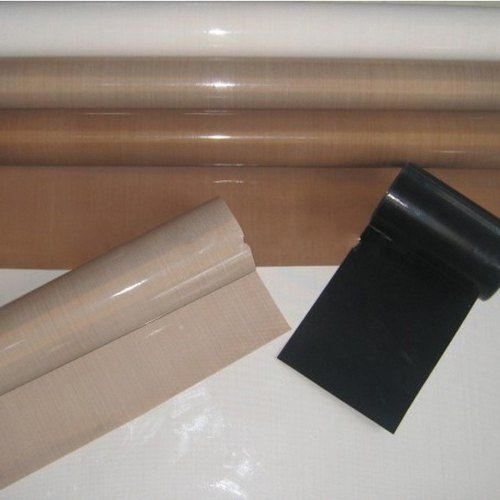
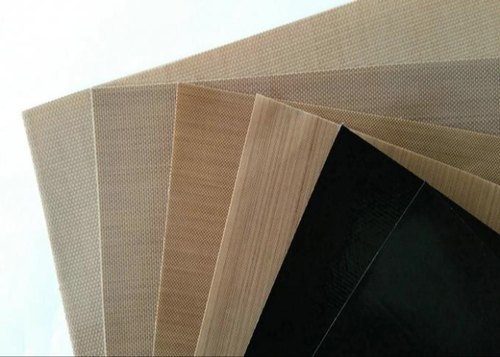
PTFE Coated Fiberglass Cloth
Price 250.00 INR/ Square Meter
MOQ : 500 Square Meters
PTFE Coated Fiberglass Cloth Specification
- Material
- Fiberglass fabrics
- Application
- In Abrasive, Aerospace, Food processing, Conveyor belt, Packaging, Photovoltaic/Solar.
- Product Type
- Fiberglass fabrics
- Dimension (L*W*H)
- 1 x 50 Meter (m)
PTFE Coated Fiberglass Cloth Trade Information
- Minimum Order Quantity
- 500 Square Meters
- Payment Terms
- Cash in Advance (CID), Cheque, Cash Advance (CA)
- Supply Ability
- Square Meter
- Delivery Time
- 3-4 Days
- Sample Available
- Yes
- Sample Policy
- Within a certain price range free samples are available
- Packaging Details
- ROLL PACKING
- Main Export Market(s)
- Asia, Australia, North America, South America, Eastern Europe, Western Europe, Middle East, Central America, Africa
- Main Domestic Market
- All India
About PTFE Coated Fiberglass Cloth
Anti-Static PTFE Coated Fiberglass Fabric is a composition of two advanced materials having remarkable properties. PTFE has outstanding properties like highly flexible, chemically inert, Thermally & Electrically Resistant & Non - stick having a melting point of 327 Degree C. PTFE is insoluble in all common solvent, It is stable enough to beused in between -73 Degree C to +260 Degree C without degrading.PTFE itself is a highly versatile product withwell know remarkable properties and fiberglass is well known as an excellent material in terms of its high temperature resistance and dimensionally stability. Combination of these two materials gives one product of practically unsurpassed utility and value with following properties:
Anti Static Grade Fabrics: To dissipate static charges developed duringprocessing of dry products, glass fabric is coated by mixing Anti-static chemical with PTFE to make Antistatic Grade PTFE coated fiberglass fabric.
Applications:
- High release from sticky materials Non- stick smooth surface
- Operating temperature range -73 Deg C to +260 Deg C
- Excellent chemical resistance
- High electrical insulative and dielectric properties
- Dimensional stabilities under heat and pressure
- Low electrical losses
- Mildew and fungus resistance
- Ultra-Violet, infra-Red, Micro-wave, radio frequency resistance
Anti Static Grade Fabrics: To dissipate static charges developed duringprocessing of dry products, glass fabric is coated by mixing Anti-static chemical with PTFE to make Antistatic Grade PTFE coated fiberglass fabric.
Applications:
- Abrasive: During the manufacturer of Grinding Wheels our PTFE or Glass Fabrics are used as a separator in place of traditional Aluminium plate. On account of Non-stick surface, less thickness and weight, more number of disc are able to cure at a time. Cost of PTFE or Glass fabric is very nominal when compare with Aluminium sheet.
- Aerospace: Designed to be Breathable without sacrificing the non-stick properties of PTFE , our porous grade allows products to cure and outgas through the fabric. Porous bleeder material used as release fabric in vacuum molding.
- Conveyor Belts: PTFE or Glass Fabric is engineered to make conveyor belts for various application in Food, Textiles & Garments, UV & IR Curing systems, Extrusion, Packaging, Chemical and many more applications are being developed day by day.
- Food Processing: PTFE or Glass Fabric belts are used for transporting Quick Frozen Foods through freezing chambers and bakery items i.e. biscuits, Confectionery items, Tortilla Industry, Drying Fruits, Tray for Baking products etc.
- Packaging: It is used for Heat Sealing applications like LDPE pouches, all kinds of dairy products. PE bags, Stationary and books packaging through shrink tunnels. Conveyor Belts on Acma Wrap machines for detergent and soap cake packing. PTFE or 2ply Glass Fabric belts are used in continuous sealers.
- Photovoltaic/Solar: High gloss and very smooth surface PTFE Coated glass fabrics up to 2500 mm wide,This can be used as belting material during solar module lamination process. PTFE Fabrics used as released products (sheets & belts) in the vacuum lamination process of rigid or flexible photovoltaic modules.
Exceptional Heat and Corrosion Resistance
Designed for demanding environments, PTFE coated fiberglass cloth withstands temperatures up to 260C and offers reliable corrosion protection. This ensures longevity and safety even under harsh operating conditions, making it ideal for use in food processing, conveyor belts, and solar panel manufacturing where thermal stability and durability are vital.
Versatile Industrial Applications
This material finds versatile usage across various industries such as aerospace, abrasive manufacturing, packaging, and photovoltaic sectors. Its non-stick surface, flexibility, and robust nature allow it to adapt seamlessly to machines and processes requiring high-temperature resistance and mechanical strength.
FAQ's of PTFE Coated Fiberglass Cloth:
Q: How is PTFE coated fiberglass cloth utilized in industrial applications?
A: PTFE coated fiberglass cloth is mainly used where high heat resistance, durability, and a non-stick surface are required, such as in conveyor belts, food processing lines, and solar panel manufacturing.Q: What are the benefits of using PTFE coated fiberglass cloth in conveyor belt systems?
A: The cloth provides a slick, durable surface, resists corrosion, maintains strength under temperatures up to 260C, and improves product flow and longevity in conveyor belt systems.Q: When should PTFE coated fiberglass cloth be considered over other materials?
A: It should be used when applications demand high working temperatures, chemical resistance, and minimal sticking, making it suitable for abrasive, packaging, and high-heat environments.Q: Where is PTFE coated fiberglass cloth commonly applied?
A: It is widely used in industries such as abrasive manufacturing, aerospace, food processing, packaging, and solar technology for its robust properties and temperature tolerance.Q: What is the manufacturing process of PTFE coated fiberglass cloth?
A: Manufacturers weave fiberglass fabrics and apply a PTFE coating, resulting in a material that combines flexibility, strength, and chemical protection for demanding applications.Q: How does PTFE coated fiberglass cloth benefit environmental conditions?
A: Its corrosion protection and heat resistance contribute to safer, longer-lasting equipment, reducing maintenance frequency and material waste in harsh environments.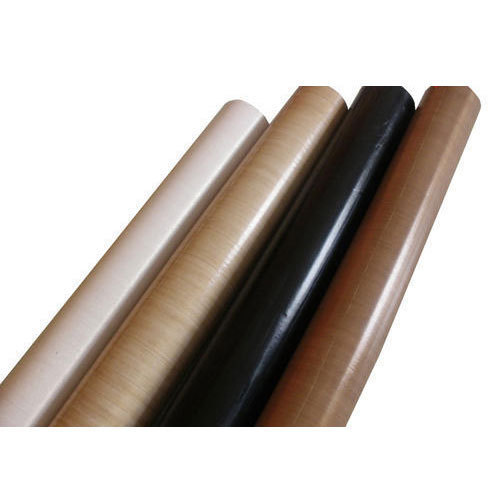
Tell us about your requirement

Price:
Quantity
Select Unit
- 50
- 100
- 200
- 250
- 500
- 1000+
Additional detail
Mobile number
Email


SHREE SHYAM CORPORATION
GST : 24ACOFS4771L2ZG
Contact Details

- 28, Parishram Industrial Hub, Sarkhej-Bavla Road, Chacharwadi-Vasana Road, Changodar,Ahmedabad - 382213, Gujarat, India

- Mr Kirit Solanki (Partner )
- Mobile :08045802262
- Phone :079-29798627

 Send Inquiry
 Send SMS
 Call Me Free

SHREE SHYAM CORPORATION
All Rights Reserved.(Terms of Use)
Developed and Managed by Infocom Network Private Limited.
Developed and Managed by Infocom Network Private Limited.


 English
 Spanish
 French
 German
 Italian
 Chinese (Simplified)
 Japanese
 Korean
 Arabic
 Portuguese
